Mapping Interconnected Bonus Systems from Smartphone Registrations to Live Dealer Table Payments
Written by Finley Vogel · Jul 23, 2026
Mapping Interconnected Bonus Systems from Smartphone Registrations to Live Dealer Table Payments
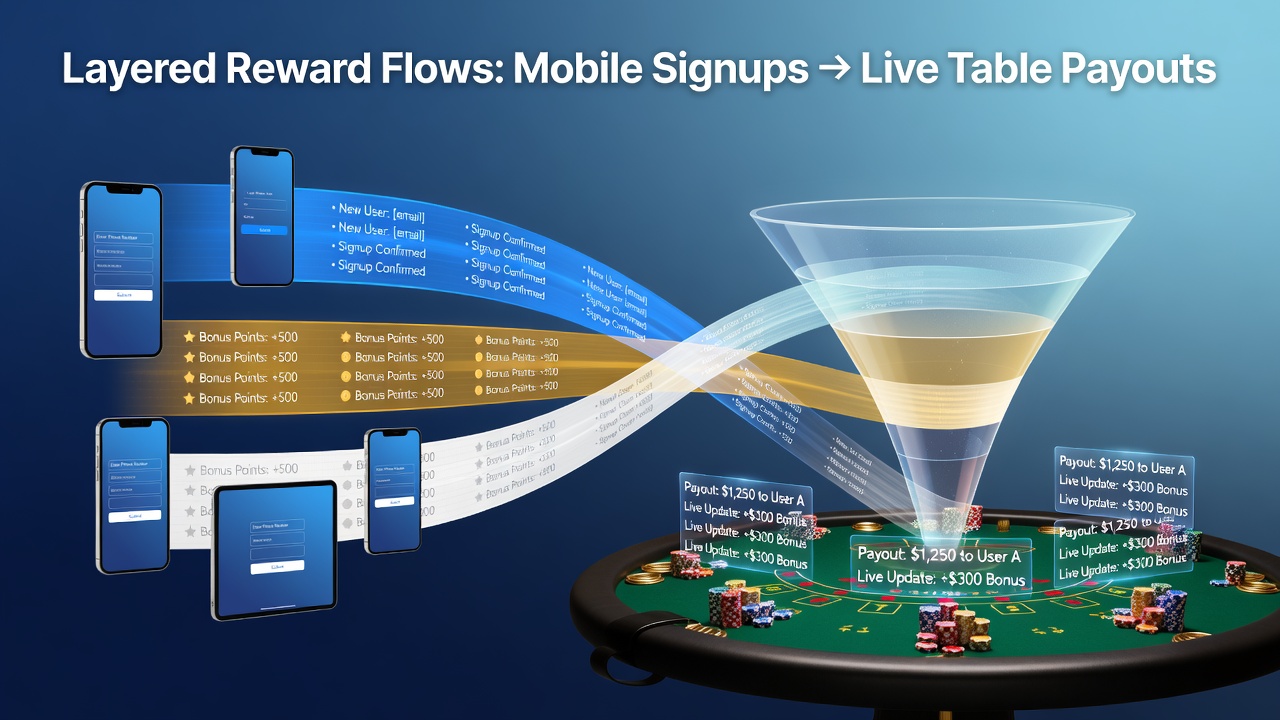
Digital gaming platforms operate through structured sequences that begin with mobile account creation and extend through multiple reward tiers before reaching live dealer table disbursements, according to industry tracking data from July 2026. These sequences rely on verification steps, deposit matches, loyalty accumulation, and game-specific multipliers that connect initial registrations to final payouts in real-time table environments.
Initial Registration and First-Layer Incentives
Users complete mobile signups by providing identification details, which platforms verify against regulatory databases before releasing entry-level rewards such as free spins or small credit allocations. Data from the Pennsylvania Gaming Control Board shows that verified accounts in the first half of 2026 received layered credits averaging 150 percent of initial deposits when users progressed through subsequent steps within 72 hours. These early incentives function as entry points rather than standalone offers, and they require users to engage with additional games before unlocking higher tiers.
Platforms integrate geolocation checks during signup to comply with state licensing rules, and this process feeds directly into reward eligibility tracking systems that monitor activity across slots, table games, and sportsbooks. One study from the University of Nevada Reno Gaming Research Center found that accounts completing verification within the same session advanced to the next reward layer 40 percent faster than those delayed by additional documentation requests.
Accumulation Across Multiple Tiers
After the first deposit, systems apply progressive multipliers based on wager volume and game type, turning base credits into compounded balances that carry forward into live table sections. These multipliers often increase when users switch from automated slots to interactive dealer tables, because platforms assign higher contribution rates to table games under their published terms. Figures released by the Mississippi Gaming Commission indicate that table game wagers accounted for 28 percent of total mobile reward redemptions during the second quarter of 2026, up from 19 percent the prior year.
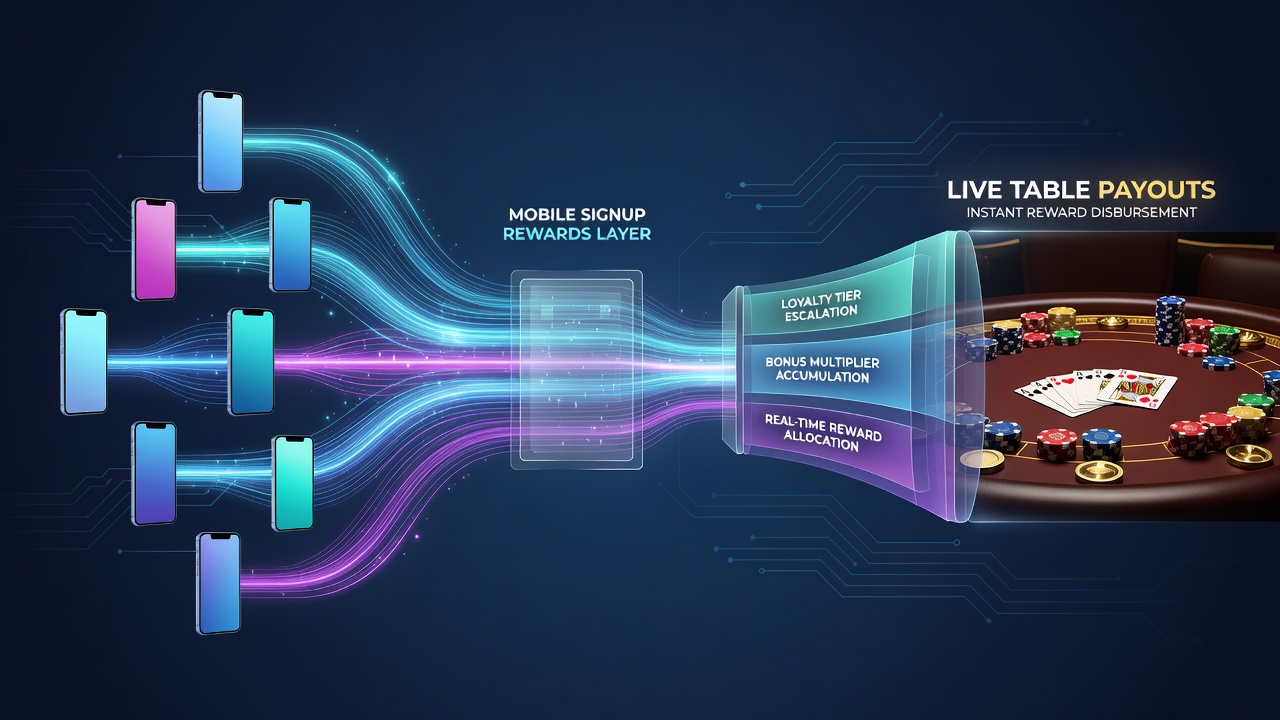
Reward flows typically follow a documented path: signup bonus converts to playable credits, credits generate loyalty points through consistent play, and points unlock table-specific bonuses such as matched bets or insurance on certain hands. This progression creates a continuous chain rather than isolated promotions, and operators update the logic monthly to align with player retention metrics.
Transition to Live Table Environments
Once accumulated rewards reach threshold levels, users gain access to live dealer tables where the same balances apply without conversion penalties in many cases. Live table interfaces display remaining reward portions alongside standard chip counts, allowing players to track how earlier signup layers influence current wagers. Operators maintain separate ledgers for bonus funds versus cash balances, yet both feed into the same payout queues when players cash out after table sessions.
Regulatory filings from the New Jersey Division of Gaming Enforcement reveal that live dealer mobile sessions in 2026 processed an average of 2.3 reward layers per completed payout request, compared with 1.4 layers for slot-only activity. This difference arises because table games trigger additional multipliers tied to hand outcomes and dealer interactions, extending the original signup chain into higher-value disbursements.
Payout Execution and Verification
Final disbursements occur after players meet wagering requirements attached to each reward layer, at which point platforms initiate withdrawal requests through integrated banking channels. Systems automatically deduct any unearned bonus portions before releasing net winnings, and this calculation occurs in real time during live table sessions. Data compiled by the Australian Communications and Media Authority shows that mobile casino payouts involving at least three reward layers averaged 18 percent longer processing times than single-layer transactions, primarily due to additional compliance reviews.
Operators also apply responsible gaming flags during payout stages, pausing flows when activity patterns suggest excessive layering without corresponding playtime. These safeguards appear in platform terms and connect directly back to the initial signup verification process, creating a closed loop that regulators monitor for compliance.
Conclusion
The pathways linking mobile signups to live table payouts operate as sequential systems built on verification, accumulation, and multiplier rules that remain consistent across major licensed markets. Records from July 2026 confirm that these structures continue to expand as operators refine tier connections and regulators standardize reporting on reward redemptions. The mechanisms rely on documented data flows rather than isolated offers, and they produce measurable payout volumes when users progress through each required stage.